Profile
Revisions
05/26/26: Added few new (and old) art pieces and a table of contents. Will add sketches and other things at a later time…..
5/21/26: New URL for their profile. :] All old links should redirect to it.
04/21/26: Removed spoilers, pared down for brevity. They’re also now a canon character!
05/24/25: Added worldbuilding notes, older art in its own tab.
- Appearance
- Personality
- History
- Trivia
- World Building Notes
- Gallery
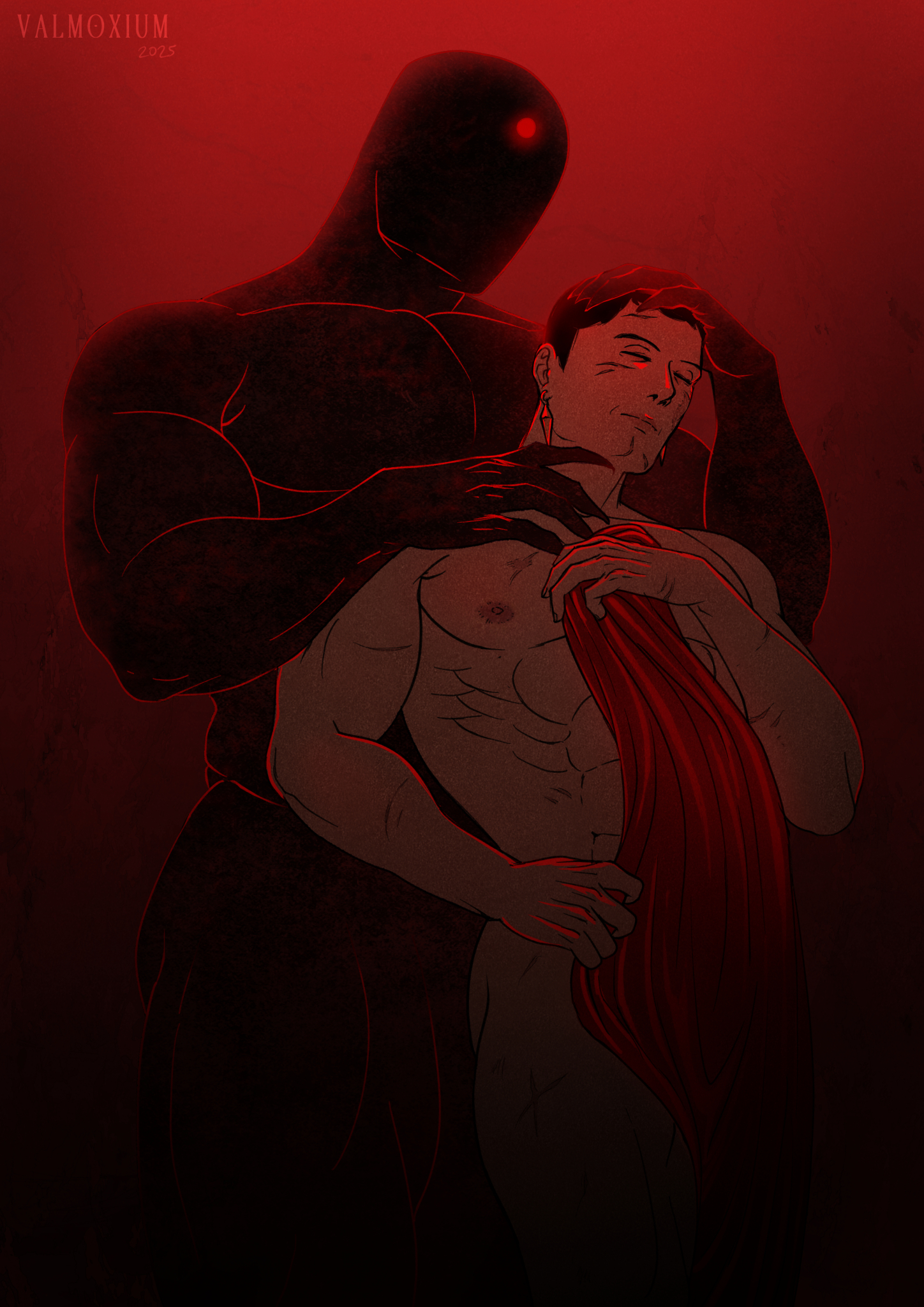
Champion Caius was a 15th century general of the East Roman Empire cataphracts and a Champion of Conquest, who was once the most highly revered god of the Romans. They are a character for the project The Red Rhapsody.
They were the last known confirmed Champion of Conquest, and was also known as one of the most divisive figures in Roman history.
Appearance
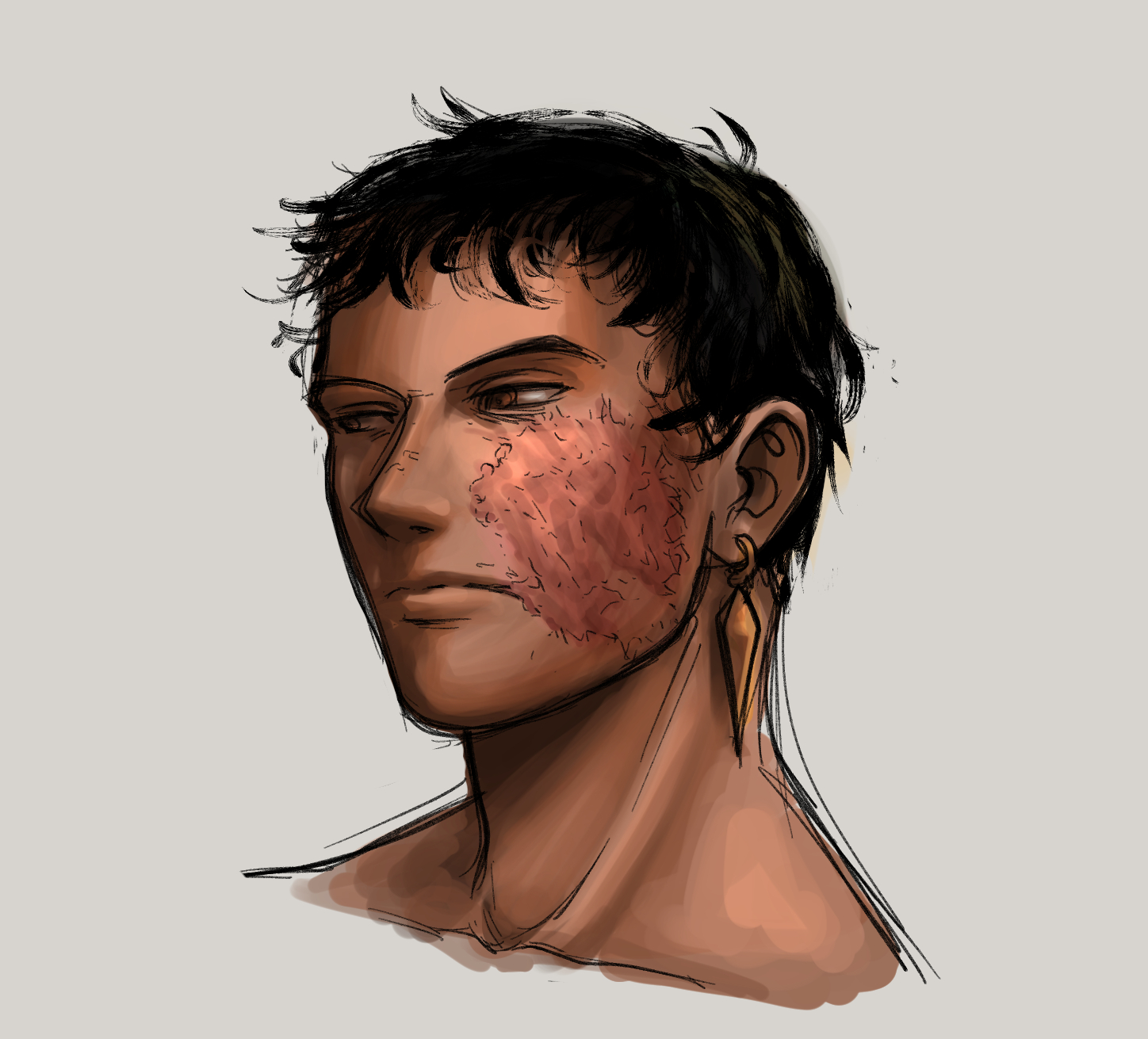
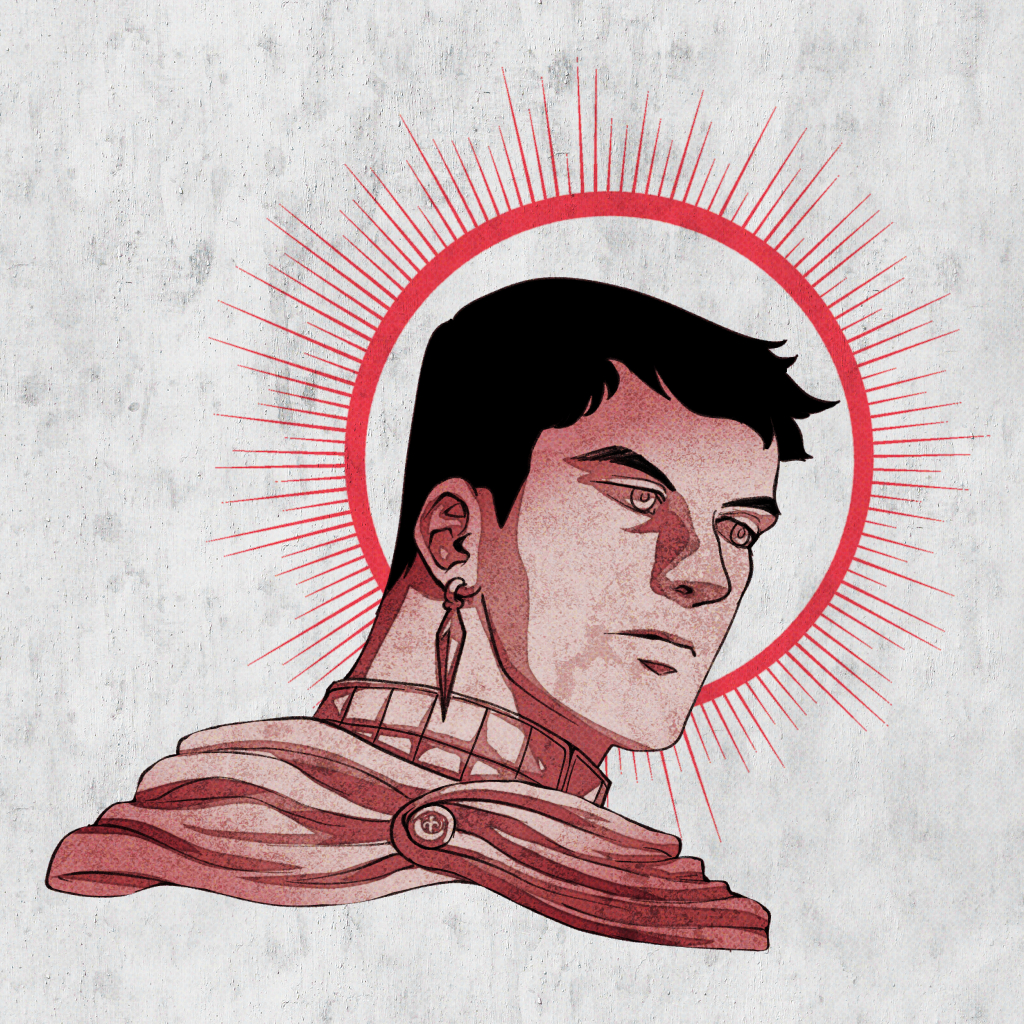
Caius was a tall, tanned, broad-shouldered and muscular Italian Roman human who stood at 6’2″ (1.88m). They had short black hair, distinctively shaped eyebrows, and piercing light brown eyes. In their 30s, they developed subtle wrinkles on the sides of their mouth.
For fashion, they were very reserved in their choices but weren’t afraid to show their wealth. They wore many-layered, well-decorated, but functional and comfortable, tunics and dresses in bright red and white with gold embroidery, but they dressed in more somber colors before their death at 34. They also always wore their favorite pair of gold, diamond-shaped earrings.
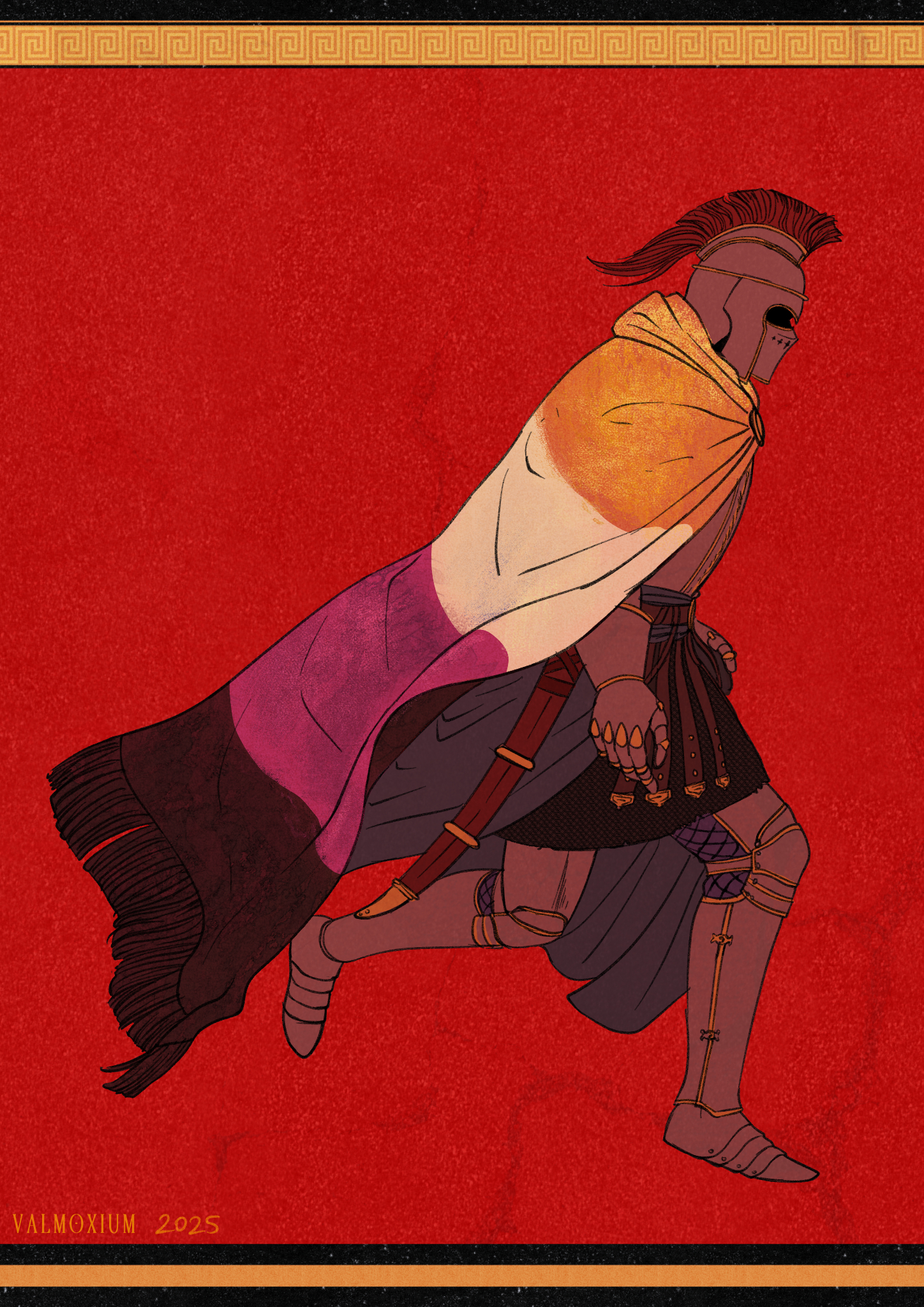
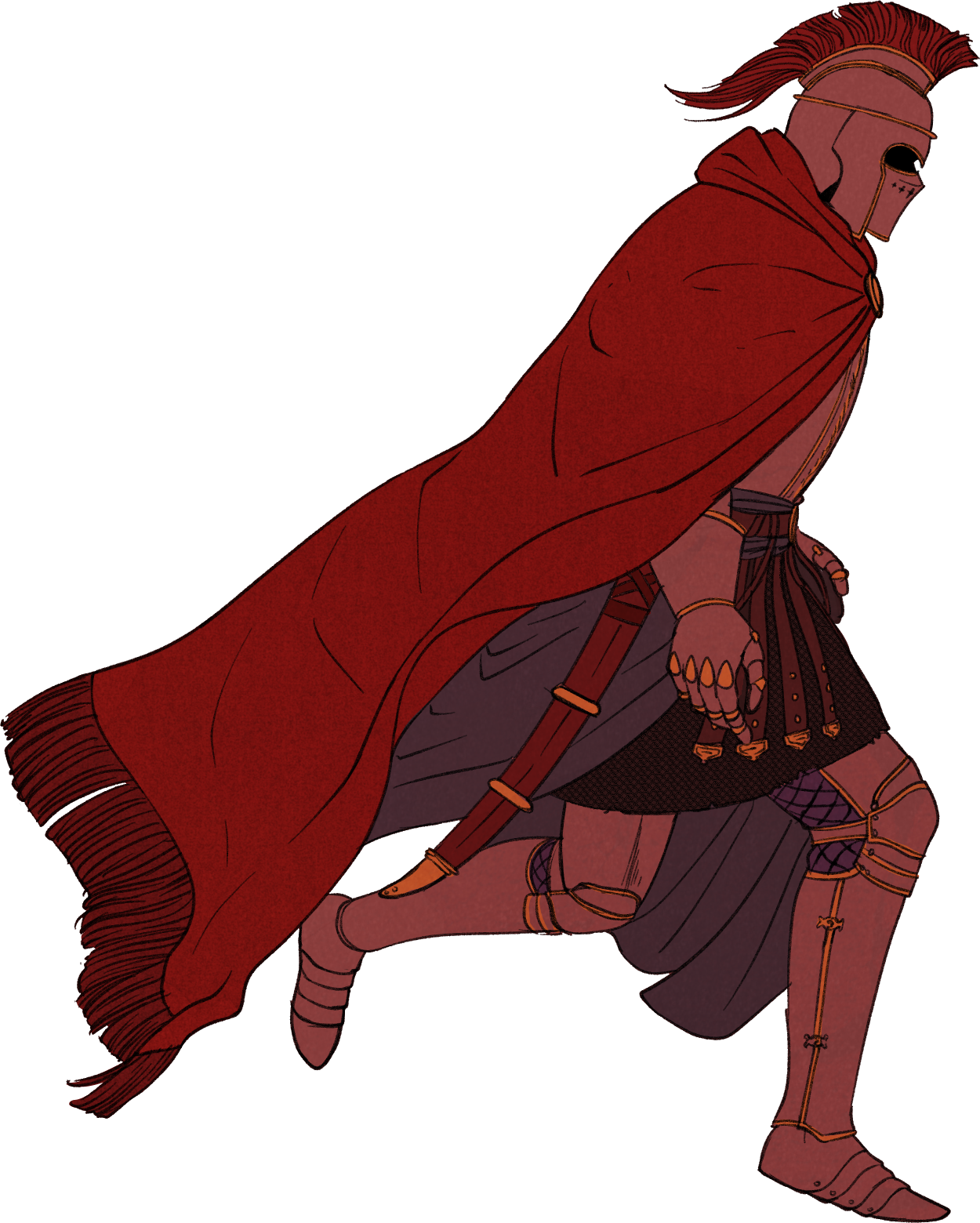
When they became a general, they usually wore blue clothing under thickly-layered armor covering their whole body including their face, a red cloak, and equipped weapons such as a mace, spear, and sword.
Personality
Caius was a very dignified individual with a strong sense of justice. They were ambitious, striving for excellence at all times, but they were also mindful and compassionate in their pursuits. They were also rather resourceful since they knew their own limitations in knowledge and compensated that with their keen intuition. However, they were also prideful and quick-tempered, which sometimes led them to make impulsive decisions. They also harbored a violent side to them that remained suppressed until they were on the battlefield. This formed an unspoken gap between them and their comrades, and even civilians, out of fear of their rumored wrath. They were also known to socialize with women more than men.
History
Caius Quintus Ramulus Scaevola was a 15th century mage and general of the cataphracts for the alternate history Roman empire. Very little is known about their later life since they became a recluse years following their death, but they were well known as a gifted, bright-minded individual, and also a troubled, violent one. They were also, however, known for being “odd” to Roman society, having several relationships but never marrying, and spending more time with women than men. They even adopted some of women’s mannerisms; some records from their relatives also revealed discussions of their gender, hence why they are referred to as nonbinary in modern day literature. They were a prodigy at birth, having a keen intuition that carried them throughout their military career. They were also violent and suffered from severe mood swings which worsened over the years, but due to their talents they were never discharged from the military.
While their Championhood was not revealed until near their time of death, it is suspected they became Occasus’ Champion 7 years before their death due to several accounts of their accelerated climb through the ranks in their late 20s, especially since some of their strategies were foreign to Romans at the time. The printing press was not invented in Europe until a century and half later, and foreign knowledge was heavily censored in Rome at the time, so it is assumed they learned these techniques from Conquest. They even became a general at only the age of 30 despite coming from a family of mid-ranking military nobles, but it was short-lived since they sacrificed themself in the final battle between Rome and Persia in the Middle Ages.
Historical records from around the world revealed that for a century prior to the Middle Ages, several of Conquest’s confirmed Champions had gone insane with power before self-destructing in some way, and Caius met the same terrible fate. Conquest at the time was already demonized in East Asia, being referred to as the devil, the embodiment of chaos, and the embodiment of evil within humanity. It is said that Caius had gone insane during battle and sacrificed themself for Conquest in order to unleash a horrific black magical storm that ravaged through Rome, Persia and several outlying territories in its path.
It is unclear what their motives truly were, but many believe it was revenge against the East Rome emperor colluding with several high-ranking Persian officials to create an artificial war for profit, of which Caius had also gathered evidence of this for 7 years. This led to inner conflict with both Rome and Persia, shifts in power, and the vilification of Conquest in Rome, something that had already been demanded by the annexed people of Rome. Caius was considered both a hero and a villain of Rome since the destruction they unleashed led to irreparable damage and severe economic decline. Even today, the area around where they sacrificed themself has been permanently scorched.
Trivia
- Scaevola means “left-handed” in Latin, which was a nickname given to them for them favoring their left hand in combat, but in truth they’re ambidextrous.
- They suffered from PTSD and Bipolar II, and while Occasus couldn’t “cure” them of it, it provided them calming relief through magic and meditation.
- Their mother secretly had an affair with a traveling merchant to birth them; they never knew this since she kept the secret to her (or rather, their) grave.
Champion Caius
Information
| Name | Caius Quintus Ramulus Scaevola |
| Given Name(s) | Caius, Quintus |
| Nicknames/Alias | Scaevola |
| Birthday | January 5th, 1421 ♑ |
| Race | Human |
| Occupation | General of the Cataphracts |
| Age | 34 |
| Height | 6’2″ / 1.88m |
| Gender | Nonbinary (they/them) |
| Orientation | Pansexual |
| Personality | Disciplined, ambitious, compassionate, prideful, condescending, slightly quick-tempered |
| Weapons | Varied. Ranged from swords to spears, bows, maces, axes, etc. whatever the situation called for |
| Unique Abilities | Multi-weapon knowledge and skills, Championhood, enhanced durability, enhanced senses, regeneration |
| Likes | Brevity, sweets, garum, singing, playing the harp, poetry, cats |
| Dislikes | Greek music, their inability to write good poetry, snails, anything slimy |
| Status | Deceased |
| Voiceclaim | Matthew Del Negro |
World Building Notes
The Federation of the Holy Roman Empire
Rome in this alternate history had absorbed all of today’s Europe, a few parts of North Africa and some parts of the Middle East— not a clean cut of those countries, though. Its neighboring country was Persia (which, location-wise, was the Ottoman Empire in real history) and they were, among other neighboring territories, the greatest adversary of Rome. The official name of Rome as a whole was “The Federation of the Holy Roman Empire”. Due to how massive Rome was, it was split into two territories known as East and West Rome, ruled by an Empress (West) and Emperor (East).
Their relationship was tenuous at best, with West Rome being more religious and reserved than East Rome, a more secular, hands-on society. The lingua franca was Latin, and there were many attempts to make it the sole language spoken throughout Rome but it failed every time, so most Romans spoke at least 3 languages regardless of class. Rome also only had one state-sanctioned religion for hundreds of years, one where Occasus was the foundation of Rome’s principles, which was of course used as a form of control.
Since Rome was constantly at war with its neighbors, they needed a constant supply of men to keep the battles going, so women would be drafted after the age of 18 in the late 1300s, then the age of conscription for men was lowered to 16 sometime in the early 1400s.
Roman Names
Caius was born with the name Quintus, given to them by their mother for being the 5th child born. They’re usually called this at home in private especially if they’re in trouble, but their official name is Caius, given to them by their father. In real Roman history, however, (male) children were usually named after the month they were born in, not by the order of which they were born. In this alternate history, however, a cultural shift happened where the practice of giving children names after the order they were born in became popular among nobles due to one well-favored West Rome emperor in the late 14th century who had all sons bearing his name with a second name to signify the order of their birth. Naming their sons all the same name wasn’t that popular, however.
Gallery
- Newer Art
- Older Art